

Product Overview
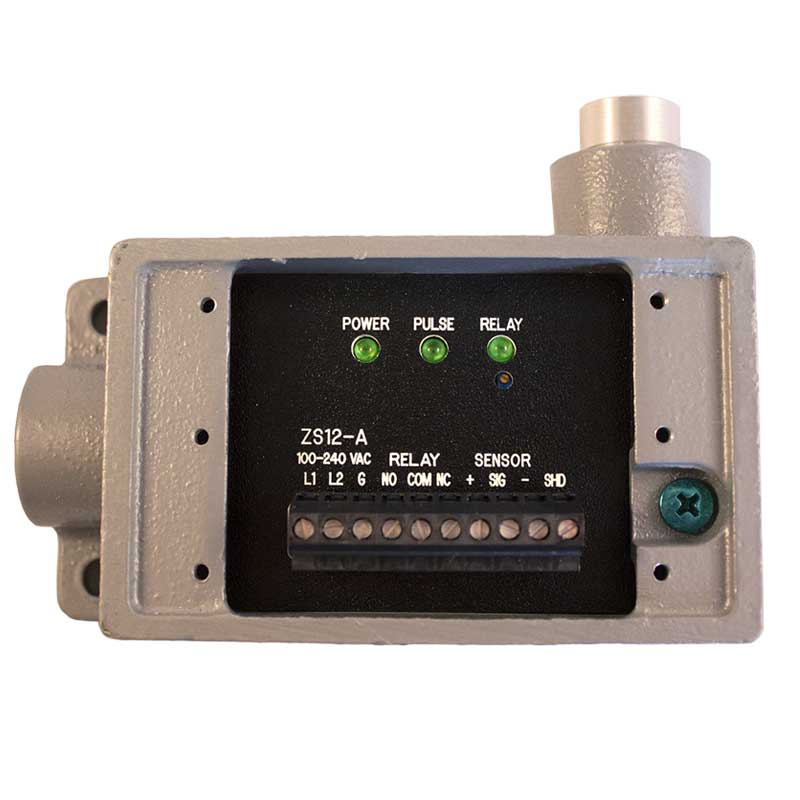
The Phares Model ZS12 Zero Speed Switch Sensor is a robust, all-in-one device designed to safeguard your industrial machinery. It features both relay and replaceable sensor, making it ideal for over-speed, under-speed, or zero-speed monitoring. This sensor protects your conveyors and other equipment from unexpected slowdowns or stops.
The ZS12 Zero Speed Switch offers precise and accurate speed measurement with its adjustable set point, controlled by a multi-turn trim pot. It can react in a fraction of a second if your conveyor or machine suddenly stops.
When your machine’s shaft speed hits the set point, the ZS12 Zero Speed Switch’s relay output changes its state. It remains in this state until the machine slows down too much or stops completely.
The Phares ZS12 Zero Speed Switch also comes with three diagnostic LEDs:
- Power: Indicates the unit is receiving power.
- Pulse: Shows if there are pulses coming from the sensor input signal.
- Relay: Displays the current status of the relay.
You can easily adjust the set point using the multi-turn trim pot for precise control.
The ZS12 Zero Speed Switch features isolated relay contacts, which makes it incredibly simple to integrate into both new and existing systems. It’s also an excellent choice for replacing older, obsolete zero-speed switches.
Product Detail
Sed interdum massa eu mi faucibus, in consectetur orci condimentum. In ornare dapibus sapien eu egestas. Nam bibendum ornare elit, ut convallis dui facilisis a. In ex diam, laoreet ut erat eu, blandit dictum risus. Interdum et malesuada fames ac ante ipsum primis in faucibus. Praesent suscipit sem velit. Morbi sit amet maximus odio. Quisque ultricies iaculis arcu id lacinia. Etiam pharetra nec mauris id laoreet. Quisque et lacus ante. Nullam magna augue, molestie eu dolor id, blandit tincidunt erat. Vestibulum ut egestas magna. Maecenas rhoncus pretium quam eget sagittis. Nam nec metus tortor. Praesent quis fringilla erat.
Versatile Applications
The ZS12 Zero Speed Switch is highly versatile and can be installed on a wide range of industrial equipment where shaft speed monitoring is crucial. This includes, but isn’t limited to:
- Augers
- Bucket elevators
- Conveyors
- Exhaust fans
- Grinders
- Turbines
It’s suitable for virtually any application requiring reliable shaft speed oversight.
Wiring & Installation
Installation is simple:
- Mount the ZS12 aiming the sensor at a rotating target such as a bolt head, key stock, flat washer, or magnet. When using a ferrous metal target, ensure it has a high iron content. Stainless steel and iron alloys are not suitable and will not trigger the sensor reliably.
- Connect relay contacts (N.O. or N.C.) to your control circuit.
Adjust the relay setpoint to match your application requirements using the trim pot on the sensor. - LED indicators show power, sensor, and relay status at a glance.
Frequently Asked Questions
Q: Do I need a separate controller?
A: No. The ZS12 includes both sensor and relay output.
Q: What happens if the shaft stops?
A: When a stop or under speed condition is detected, the relay LED turns off and the relay disengages, returning to its default (normal) state.
Q: How close should the sensor be to the target?
A: For ferrous targets, a minimum of 1/16″ (6 mm) to approximately 5/16″ (7.94 mm).
When using a Phares Electric magnet or magnetic disk, the recommended sensing distance ranges from approximately 1/4 inch (6.35 mm) to 1 inch (25.4 mm), depending on the specific magnetic target selected.
Features
- Self contained zero speed switch with relay and low profile, replaceable sensor
- Isolated relay contacts switch up to 5 amps
- Senses magnetic and high iron content targets (gear tooth, key stock, bolt head, etc.)
- Universal input voltage – 100 to 240 VAC or 9 to 36 VDC
- LED indicators for instant visual confirmation
- Precision trim pot for accurate relay set point adjustment
- Detect speeds as slow as 0.03 RPM
- Detect speeds as high as 25,000 RPM
Specifications
| Operating Voltages | 9-36 VDC or 100-240 VAC |
|---|---|
| Current Draw | 50 mA |
| Circuit Protection | Internal ½ amp fuse, non-replaceable |
| Relay |
Output: Contact Rating: Maximum switching frequency: Life expectancy: Electrical 100,000 operations min. (at 1,800 operations/hr) |
| Relay Set-Point Adjustment Range | Standard: 1-100 RPM, 1 Pulse Per Revolution Custom parameters are available. |
| Housing Material | Cast Aluminum |
| Sensing Distance to Target (Gap) | Internal 1/2 Amp non-replaceable fuse |
| Cable | 4 ft., 6 Conductor, 22 AWG, Unshielded |
| Sensing Distance to Target (Gap) |
1/16″ to 5/16″ using Ferrous Target (Geartooth Wheel, Bolt Head, Key Stock, etc.) 1/2″ to 5/8″ using Phares Magnetic Disk |
| Minimum Gear Tooth Target Sizes | 1/8″ geartooth length, width, depth and gap. |
| Gear Tooth Target Material | High ferrous (iron) content. |
More Solutions…
ZS09P Zero Speed Switch Sensor
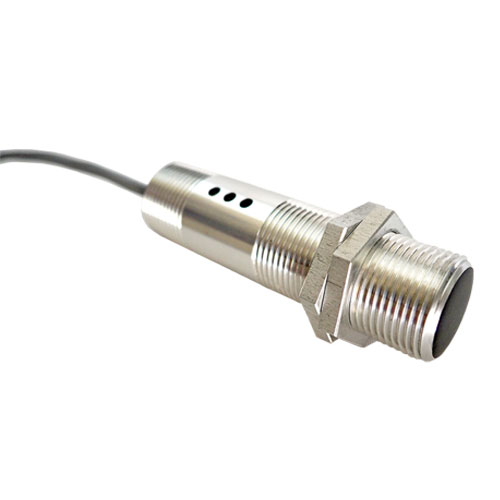
The ZS09P is a compact, self-contained zero speed switch for applications requiring a higher-power relay output. It switches loads up to 5 amps, making it a good choice for directly controlling equipment or control circuits without a separate control module.
ZS09R Zero Speed Switch Sensor
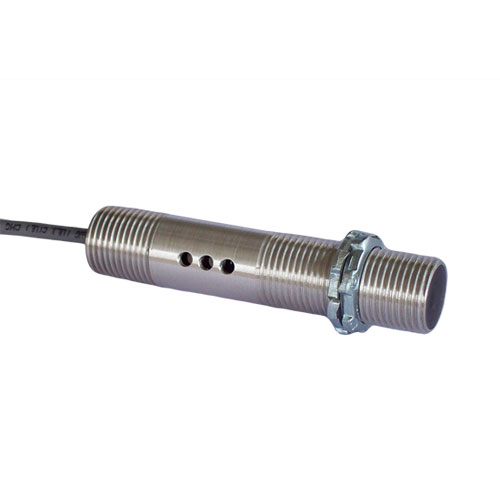
The ZS09R provides the same convenient sensor-and-relay approach as the ZS09P in a smaller package, with a 1-amp relay output. It is particularly well suited for sending speed-status signals to PLCs, VFDs, DCS systems, and other control equipment.

ZS10 Zero Speed Switch Module
The ZS10 is a DIN rail-mounted zero speed switch module that works with your choice of industrial sensor. The sensor must provide a digital square wave signal. This flexible configuration keeps the sensor at the machine while the control module can be mounted safely inside a control panel. The ZS10 is well suited for industrial speed monitoring applications where a separate sensor and control module are preferred.
ZS11 Zero Speed Switch Module
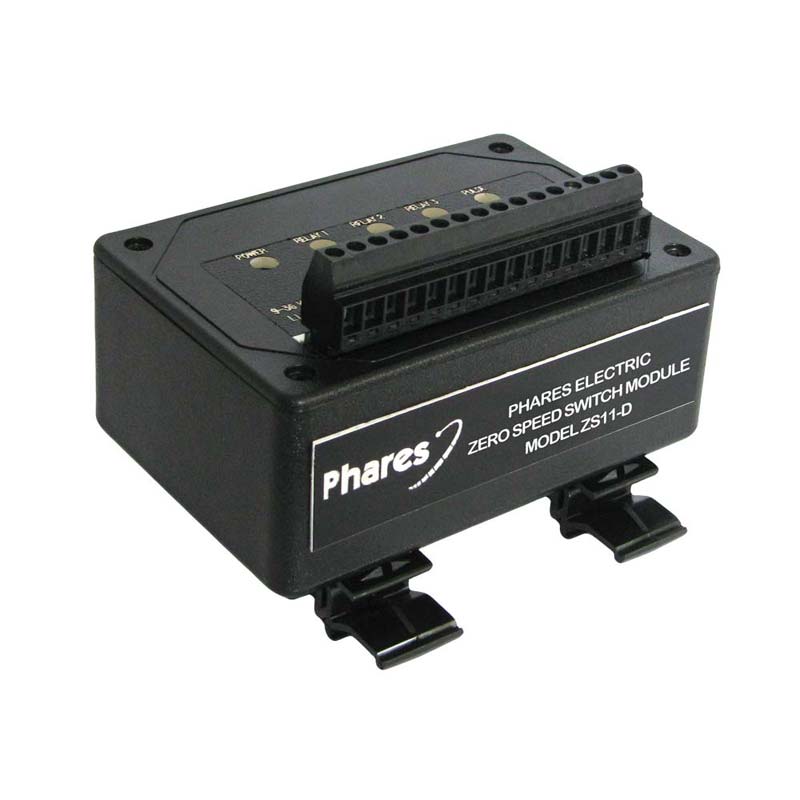
The ZS11 is designed for applications requiring multiple speed setpoints from one sensing location. Its three independent relay outputs allow different speed conditions to be monitored without using multiple PLC inputs or separate zero speed modules.